Chinese, Korean, and Hawaiian BBQ: How They Differ (2026)
07 October 2026 · 8 min read
Three Grills, Three Traditions
Walk into a restaurant anywhere in California advertising "BBQ" and you could be looking at three almost unrelated cuisines. Chinese BBQ, Korean BBQ, and Hawaiian BBQ all put meat near fire, but the cut, the marinade, the cooking method, and the way the meal is served are different enough that lumping them together misses the point of each one. This guide breaks down what separates them, with real restaurants in each category so you can taste the difference instead of just reading about it.
The three styles share a grill in name only. Chinese BBQ in the Cantonese tradition is mostly about roasting and glazing whole cuts — duck, pork belly, soy-sauce chicken — that hang in a window or rest under a heat lamp before being chopped to order. Korean BBQ is a table-cooking ritual: thin-sliced or marinated meat goes on a grill built into the table itself, and the diners do the cooking. Hawaiian BBQ, or "plate lunch" BBQ, is a mainland-Pacific hybrid: teriyaki-glazed or huli-huli-style grilled meat served over rice and macaroni salad, closer in spirit to a diner plate than to either Chinese roasting or Korean tabletop grilling.
Chinese BBQ: Roasting, Glazing, and the Roast Meat Counter
What most people picture when they hear "Chinese BBQ" is the roast meat counter: whole roasted ducks and glistening slabs of pork belly hanging in a restaurant window, char siu (barbecued pork) glazed red-brown with a sweet-savory marinade, and soy-sauce chicken poached and lacquered rather than grilled over open flame. This is Cantonese siu mei cooking, and it's a world apart from a backyard barbecue. The meat is prepared ahead of time by a roaster, then chopped on a cleaver block and served over rice or noodles, or packed for takeout by the pound.
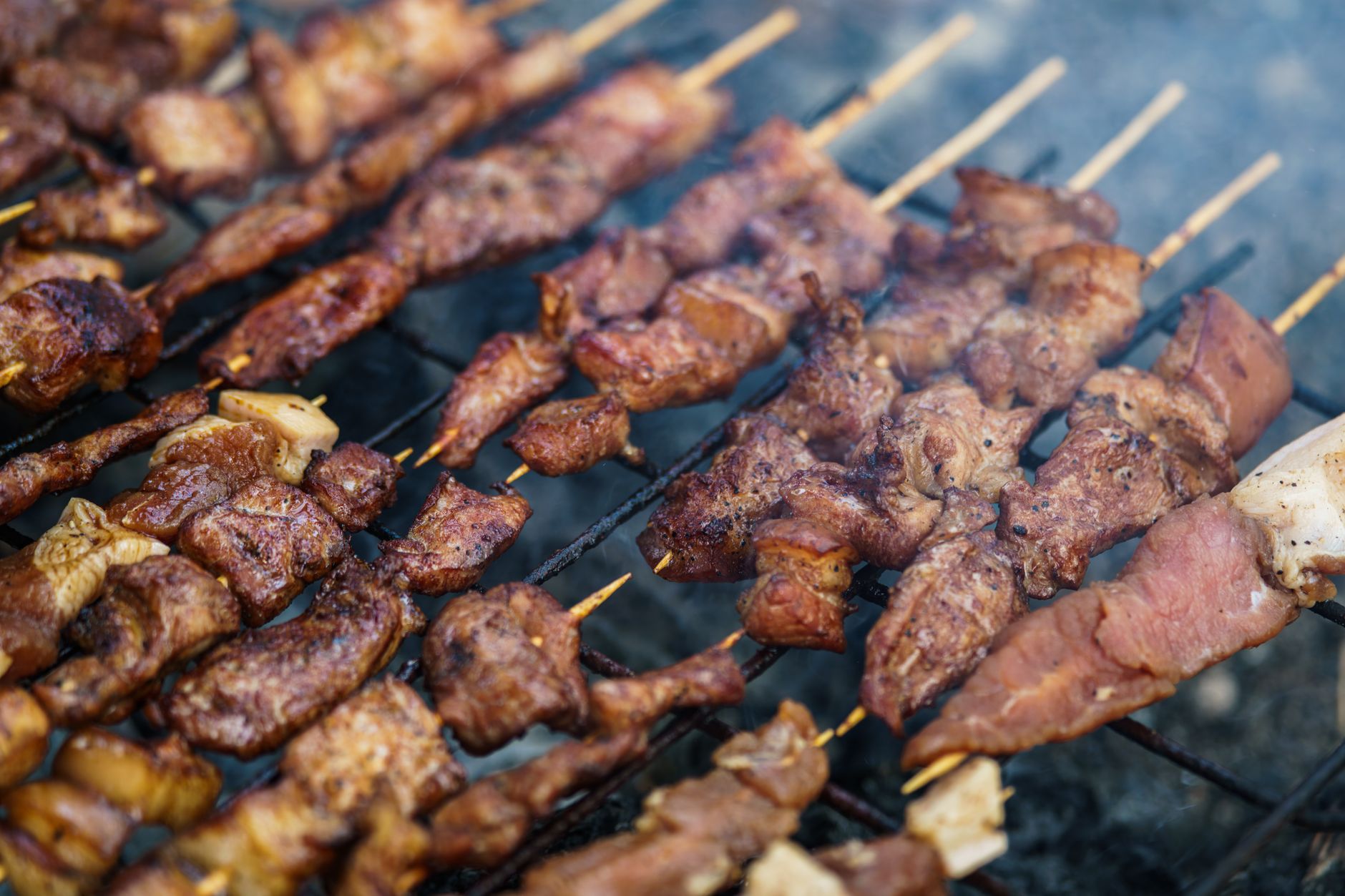
A newer strain of "Chinese BBQ" that's grown popular in the last decade is the skewer-grill format — lamb, beef, and chicken skewers seasoned with cumin and chili, cooked over charcoal or open flame, closer to Xinjiang-style street food than Cantonese roasting. Chubby Skewers in Rowland Heights, listed on the directory's Chinese BBQ & Roast Meats page for Rowland Heights, is one example of this skewer-forward style, while hot-pot-and-BBQ hybrid chains have also entered the category.
Chinese BBQ & Roast Meats · Los Angeles, California
356 E 2nd St, Los Angeles, CA 90012
★★★★★4.9(4,031)
One chain worth knowing is Chubby Cattle, which runs a Mongolian hot-pot-and-BBQ concept with locations across Southern California, including a Little Tokyo location in Los Angeles and one in Irvine. The format there centers on all-you-can-eat shareable grilling and hot pot rather than the roast-meat-counter style, which is a useful reminder that "Chinese BBQ" as a category on a directory like this one covers more than one actual cooking tradition — always check what's on the menu before you go in expecting a specific style.
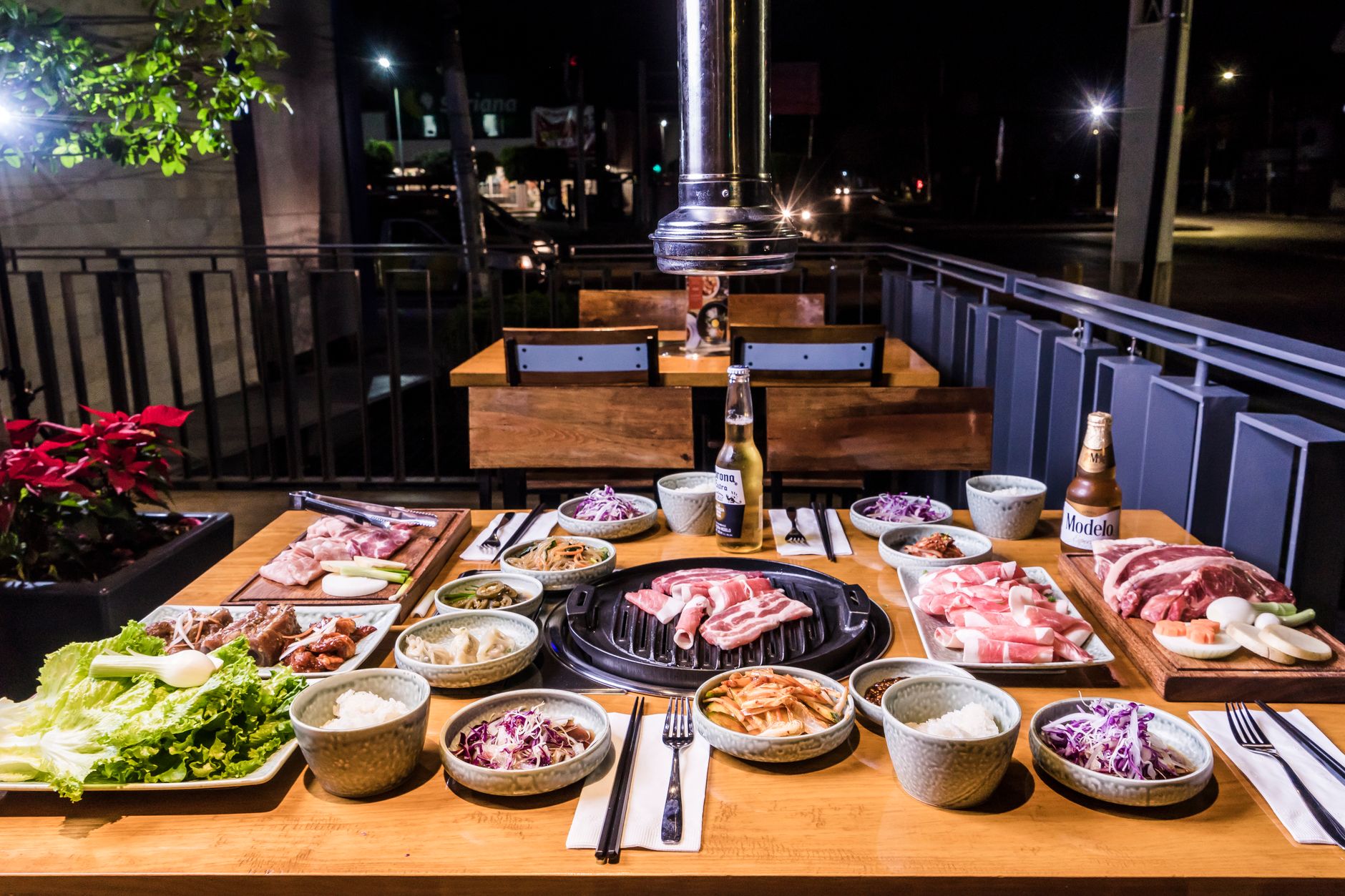
Korean BBQ (gogi-gui) is built around a different idea entirely: the diner does the cooking, at the table, usually over a built-in gas or charcoal grill. Thin-sliced beef short rib (galbi), pork belly (samgyeopsal), and marinated bulgogi are the anchor proteins, brought out raw or lightly marinated and grilled a few pieces at a time so nothing overcooks while you eat. The meal comes wrapped in lettuce or perilla leaves with a spread of banchan (small side dishes) — pickled radish, seasoned bean sprouts, kimchi — that get refilled through the meal.
Korean BBQ restaurants in the US split largely into two formats: all-you-can-eat (AYCE), where a flat per-person charge covers unlimited ordering within a time limit, and à la carte, where each cut is priced and ordered individually, usually at a higher quality tier. BBQ AYCE in Los Angeles, which appears on the directory's Korean BBQ page for Los Angeles, is a straightforward example of the AYCE format; always check current pricing and time limits directly with the restaurant, since both change and AYCE deals are frequently tiered by cut quality.
Outside Koreatown-dense cities, Korean BBQ has spread to mid-size suburbs too. Let's GoGi in Downey, listed under Korean BBQ in Downey, and Marinate Korean BBQ in Long Beach, under Korean BBQ in Long Beach, both serve the tabletop-grill format in Southern California cities that aren't traditionally known as Koreatowns, which says something about how mainstream the format has become.
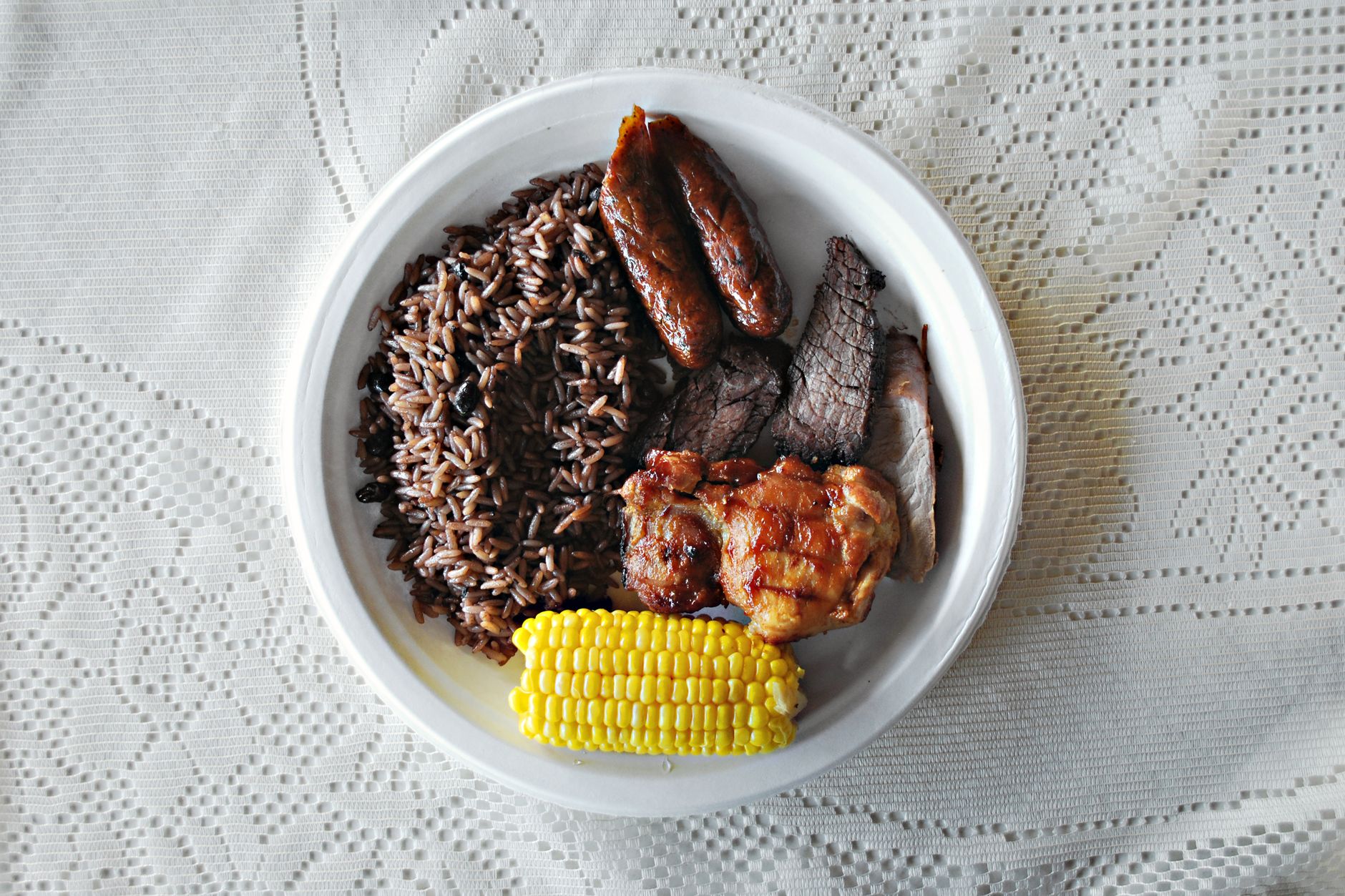
Hawaiian BBQ is the odd one out, because almost nobody eats it tableside. It's a plate-lunch tradition that grew out of Hawaii's multiethnic plantation-era food culture — Japanese, Filipino, Portuguese, and Native Hawaiian influences all show up in the format. The signature move is meat (often chicken thigh, short ribs, or Spam) marinated in a shoyu-and-brown-sugar or huli-huli sauce, grilled or griddled off-site, then plated with two scoops of white rice and a scoop of macaroni salad. There's no tabletop grill and no self-cooking; you order at a counter and the plate comes assembled.
Maui Chicken in Torrance and TNT Aloha Cafe in the same city — both on the directory's Hawaiian BBQ page for Torrance — are examples of this counter-service plate-lunch format, which is built for speed and takeout rather than a lingering sit-down meal. Shootz in Long Beach, under Hawaiian BBQ in Long Beach, follows the same template with a more modern fast-casual build-out.
This table is a generalization — plenty of restaurants blend formats, and a single directory category can include more than one actual style, as the Chinese BBQ examples above show. Use it as a starting point for what to expect, not a guarantee of what any specific restaurant does.
Ordering Tips for Each Style
If you're trying Chinese BBQ for the first time, go at lunch when the roast meat counter has the most selection, and ask for a "combination plate" if the restaurant offers one — it's usually the easiest way to taste two or three roasted meats without committing to a whole duck. Takeout is the default use case here; dine-in seating is often minimal.
For Korean BBQ, groups of three or more get the most value out of an AYCE deal, since a wider spread of banchan and more frequent grill turnover make the meal feel less rushed. If you're dining solo or as a pair, à la carte ordering at a smaller portion is usually the better fit, and it lets you pick higher-grade cuts instead of the standard AYCE tier. Reservations are worth making on weekend nights at popular spots — Korean BBQ restaurants in dense areas turn tables quickly and walk-ins can mean a real wait.
Hawaiian BBQ is built for speed, so it's a strong option for a weekday lunch, a beach-day takeout order, or feeding a family without a sit-down wait. Because the format is plate-and-counter rather than tabletop grilling, there's generally no reservation system and no minimum order — it scales down to a single plate as easily as it scales up to catering trays for a group.
Dietary and Group Considerations
None of these three styles were built with vegetarian diners as the default customer, so advance planning matters more here than at a typical American restaurant. Korean BBQ restaurants usually have the most flexibility, since banchan sides, lettuce wraps, and tofu-based options can round out a vegetarian plate even if the center-of-table grilling is meat-focused — call ahead to confirm what a particular restaurant can do. Chinese BBQ counters are the least flexible for vegetarians, since the entire draw is the roasted or grilled meat; a side of rice and vegetables is usually the extent of what's available. Hawaiian BBQ plates can sometimes be built around grilled vegetables or tofu in place of the meat portion, but it's worth calling ahead rather than assuming.
For larger groups, Korean BBQ AYCE formats are the most forgiving on logistics — most restaurants are set up for parties and will seat groups at tables with multiple built-in grills. Chinese BBQ and Hawaiian BBQ are both better suited to ordering ahead for pickup when feeding a crowd, since neither format centers on a shared cooking experience at the table. Check hours before planning a group trip; roast meat counters in particular tend to sell out of popular items (whole ducks especially) later in the day.
Parking, Access, and Practical Notes
Each of the restaurants named above sits in a different kind of commercial setting — some in standalone buildings with dedicated lots, others in strip-mall or mixed-use retail centers typical of Southern California food corridors. Parking availability and wheelchair access vary by location and can change, so it's worth checking a restaurant's own website or calling ahead if either is a specific concern, rather than assuming based on the neighborhood. Hours listed on each restaurant's directory page reflect what's publicly posted, but restaurants do adjust hours around holidays, so confirm same-day hours for anything time-sensitive.
The Takeaway
Chinese BBQ, Korean BBQ, and Hawaiian BBQ aren't variations on the same meal — they're three different dining formats that happen to share the word "BBQ" in their English name. Chinese BBQ is about meat roasted or grilled ahead of time and served quickly, often for takeout. Korean BBQ is a cook-it-yourself, sit-down, social meal built around shared grilling and banchan. Hawaiian BBQ is a fast, plate-lunch format meant to get you fed without ceremony. Knowing which one you're actually in the mood for — a quick roast-meat lunch, a long table-grilling dinner with friends, or a fast plate on the way somewhere else — will get you to the right restaurant faster than searching "BBQ" and hoping for the best. Check current hours and prices directly with each restaurant before you go, since both can change.
Berkeley doesn't have one Chinatown or one Koreatown. Its Asian food scene is strung along four parallel corridors instead — University Avenue, Shattuck Avenue…